
Guided Tour
Welcome to the guided tour. It will give you the most important information about the lecture in a compact way and will help your way around the different materials and communication options that IAM offers to you. If any open questions remain, feel free to ask them during the lecture meetings.
1. Lectures
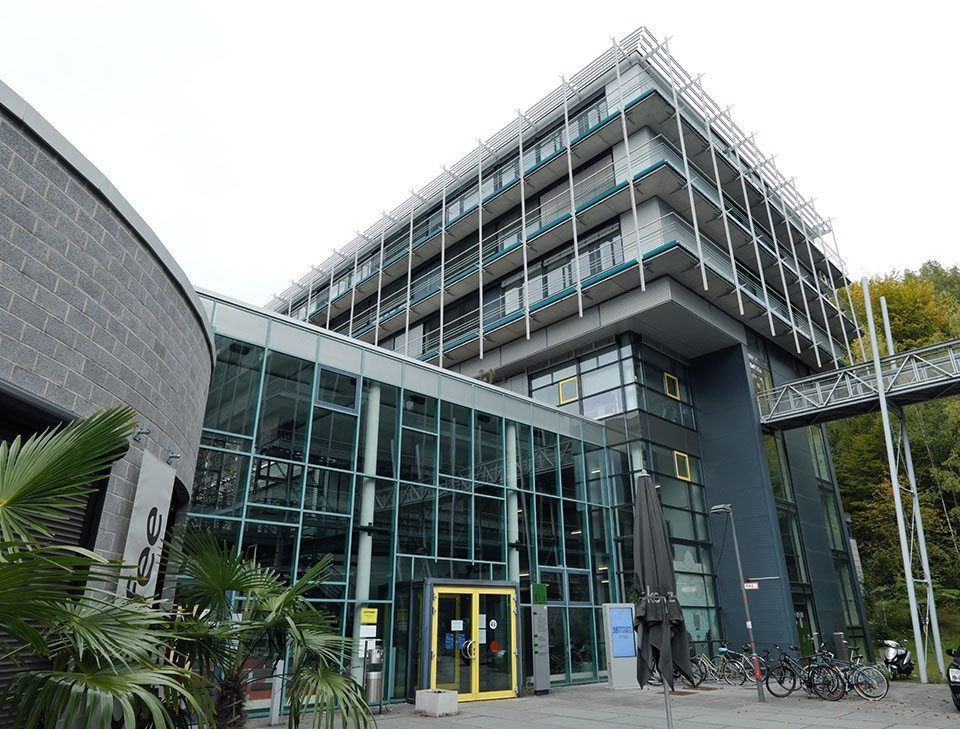
The first meeting takes place on Thursday, October 19., 12:15-14:00, in Building E1.3, Lecture Hall 001. All other meetings also take place in this time slot and location.
The first lecture will introduce you to the basic topic, the course format, and gives you an opportunity to ask any general questions that are not answered by the guided tour. Please make sure to attend this first meeting, such that you get all information necessary for a productive semester!
If you want to participate online, you can do so via MS Teams. The corresponding link is also on our materials CMS page. Lecture recordings will be made available.
2. Tutorials
Tutorials serve an important purpose in the class even though attendance is not mandatory: They are intended to be the most active component of the course that is focussed on problem solving. This is also why we have intended all assignments for team work. You are highly encouraged to work together in groups of 2-3 people. Discussing assignments fosters more effective learning, even if you could solve them on your own. This has the added benefit that it reduces your workload a bit.
2.1 How to find a group?
Alternatively, you can register for the group roulette (random assignment) here on the CMS on your personal page under registrations. Random assignments will only be made after the registration phase is over and students have been assigned to tutorial slots.
2.2 Classroom Work
There is only one on-site tutorial slot for this semester. The attendance statistics of the last semesters suggest that the resources for two groups can no longer be justified. If you cannot attend the tutorials, but require guidance, we offer an office hour. The time slot for this office hour is announced on the main page.
We believe that attending the tutorials should feel like time well-spent. Thus we minimise the time in which your tutor presents solutions to you. Instead, the focus lies on you actively solving assignments that can often be a quite open and inviting for discussions. You will solve these assignments in group work and your tutor is there to assist you: Ask for hints if you are stuck, or for feedback on your solutions.
In the age of AI assistants, this format encourages you to engage with the assignments using your own cognitive abilities and knowledge without the need to reach certain point quotas for exam admission. In particular, attendance of the classroom work is not mandatory, but the assignments are relevant for the exams.
We provide example solutions, but this cannot replace solving the assignments on your own. Solve them during the tutorial hours or in your favourite setting (e.g. in group work at the university, at home, or in your favourite café). Use the opportunity provided by the tutorial and office hour to deepen your understanding and discuss with our staff.
3. Exams
There are two written exams. Exam dates and location are published on the main page.
4.1 Admission
The only admission requirement is an LSF registration. You need to register for each exam separately here. Registration becomes active after the first weeks of the semester and the deadline is one week before the corresponding exam. We do not maintain the LSF system ourselves and if you miss the deadline, there is nothing we can do for you. In case you are an Erasmus student or your course of study does not support LSF, simply contact us informally if you want to write an exam.
4.2 Relevant Lecture Materials
Unless ruled out explicitly, all contents of the lecture, uploaded materials, and classroom work are relevant for the exams.
4.3 Closed Book Format
We use closed book format. That means you cannot bring any lecture materials or any electronic devices (including calculators). Bringing any materials or devices counts as cheating.
The exam format is structurally the same for all our exams. You can get an impression of the type of assignments to expect in the self-test posted in the lecture materials. This document also contains more detailed rules for the exams. The first and second exam are designed to be of equal difficulty level. You can participate in both exams and the better grad counts.
If you are sick, please contact us and your examination office with a sick note to avoid the exam being registered as a failed attempt.